
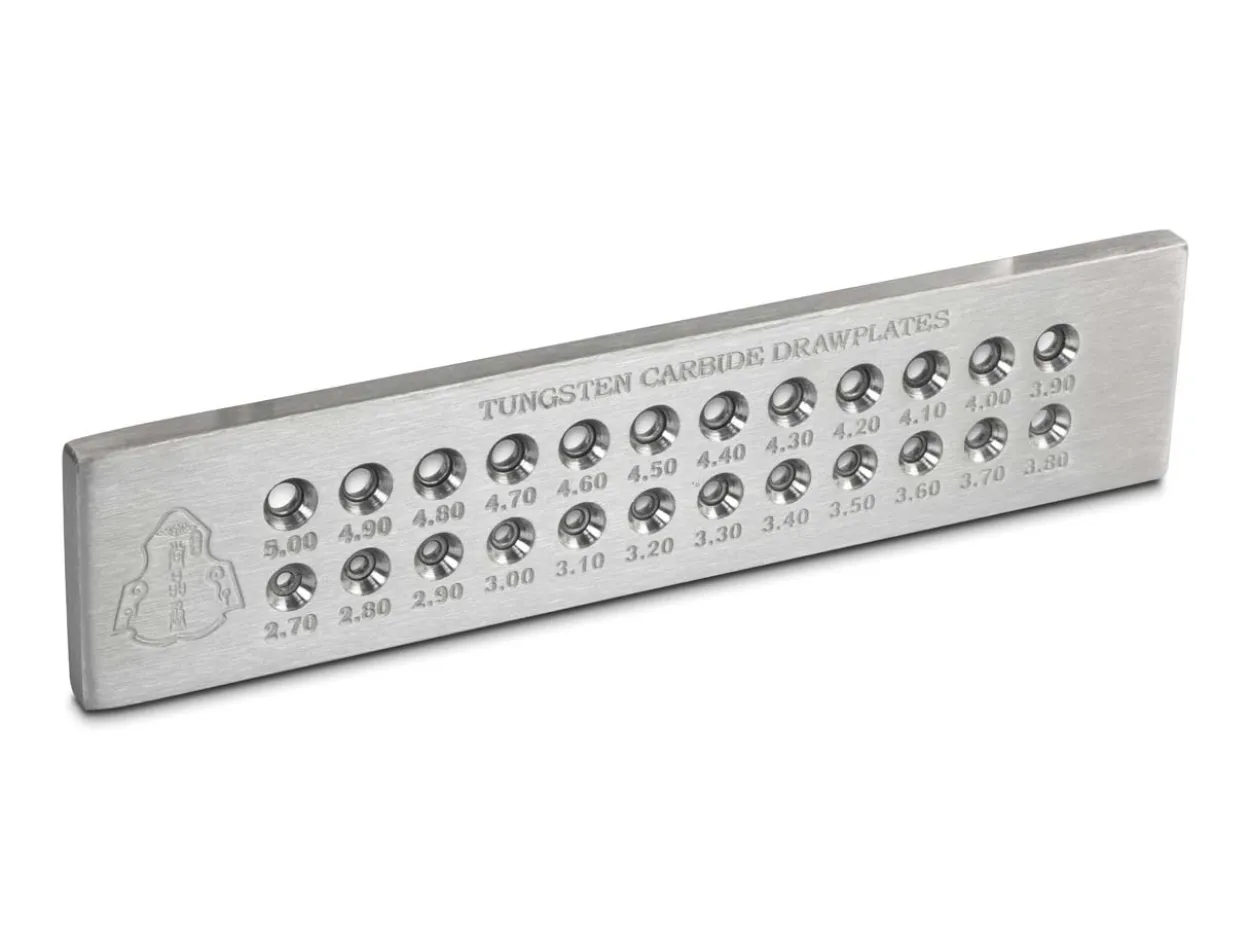
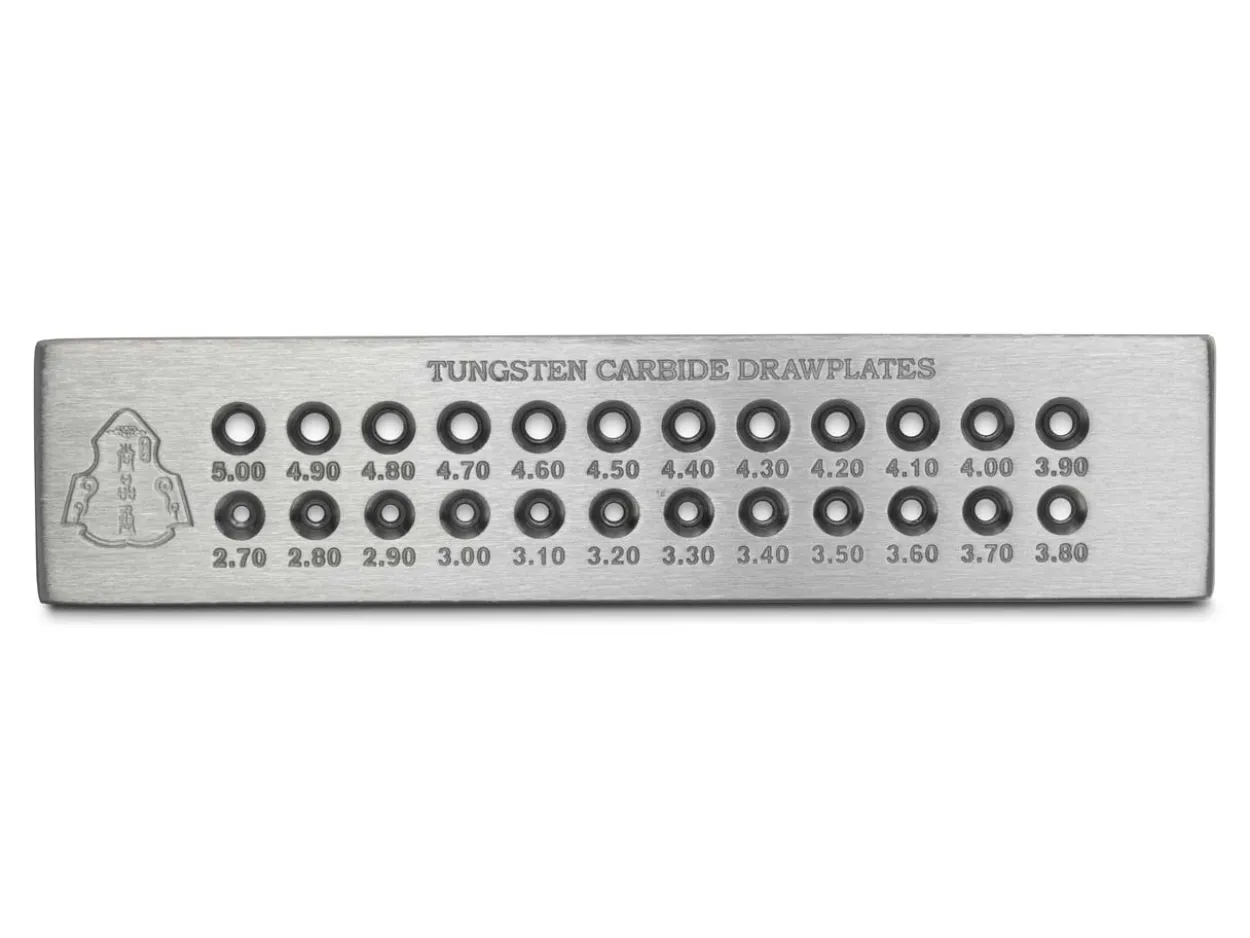
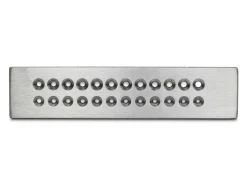
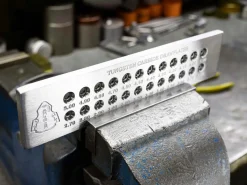
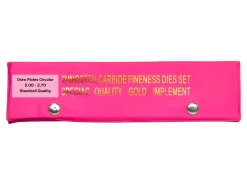
Tungsten Carbide Round Circle Drawplate, 2.70mm – 5.00mm
£38.47
Description
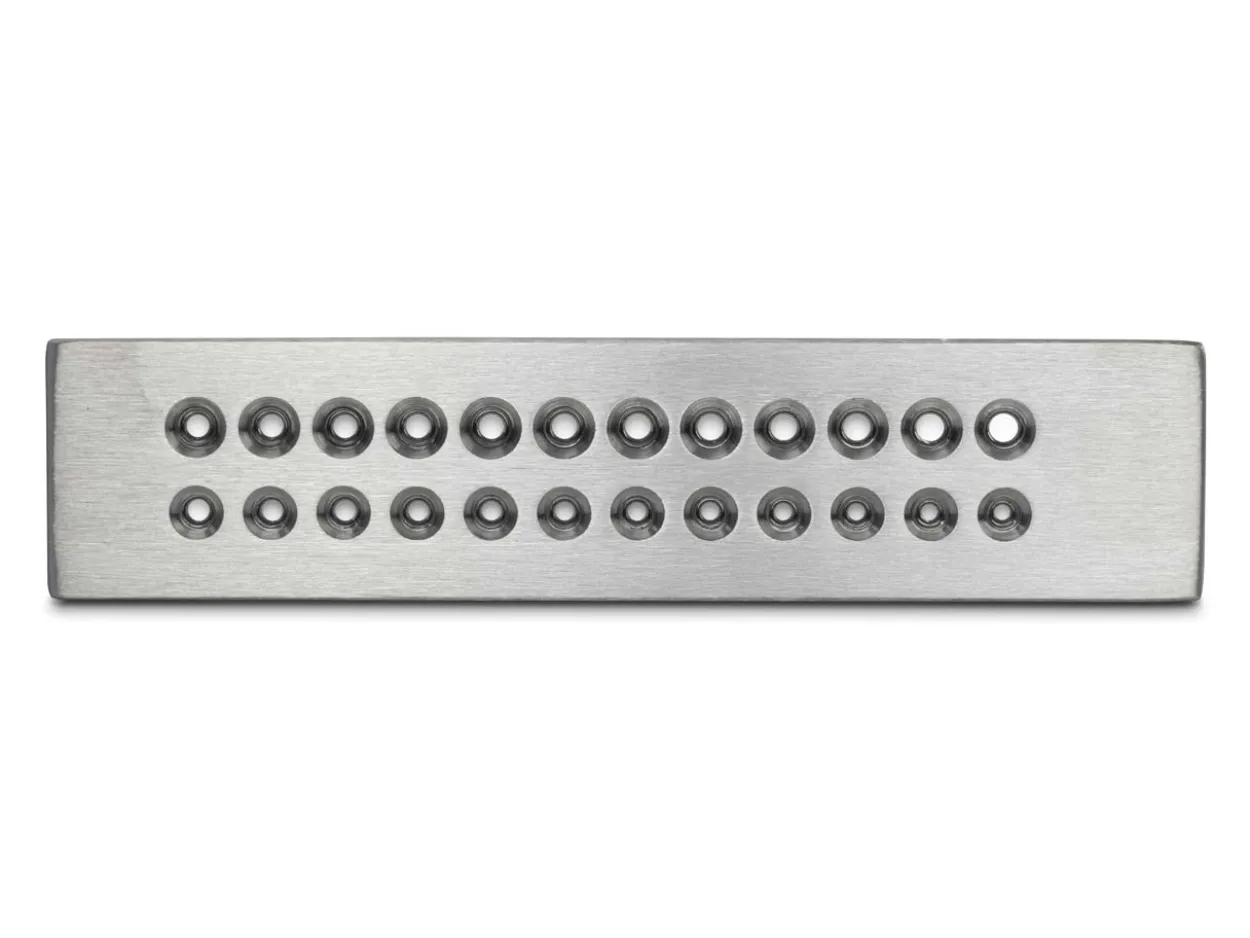
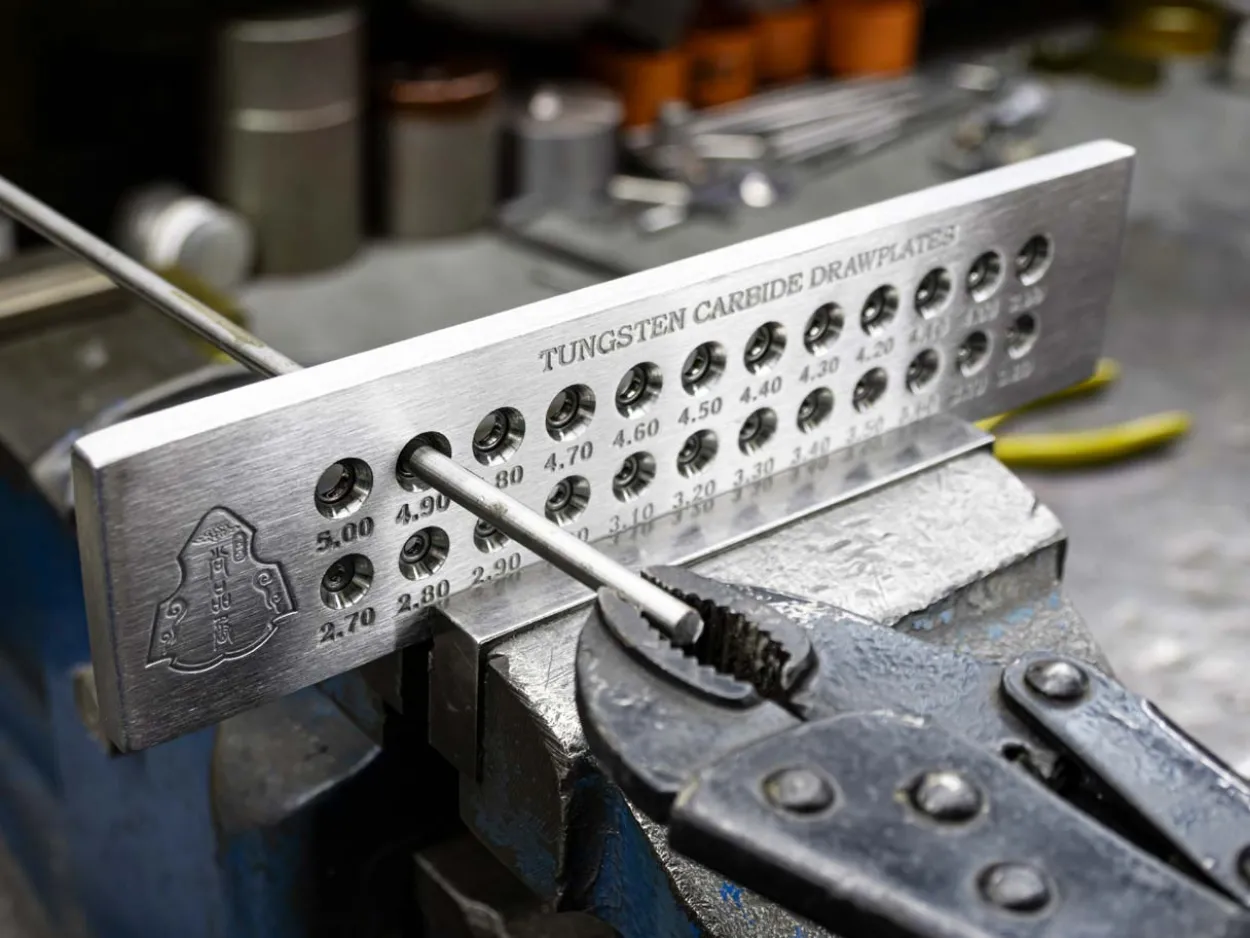
A drawplate is a tool designed to decrease the thickness and diameter of wire. It is made from hardened metal and features a sequence of gradually smaller holes that the wire is pulled, or ”drawn” through. As the wire passes through these holes, its diameter is reduced and its length increases.
The sizes range from 5.0, 4.9, 4.8, 4.7, 4.6, 4.5, 4.4, 4.3, 4.2, 4.1, 4.0, 3.9, 3.8, 3.7, 3.6, 3.5, 3.4, 3.3, 3.2 and 3.1mm.
How to use a drawplate:
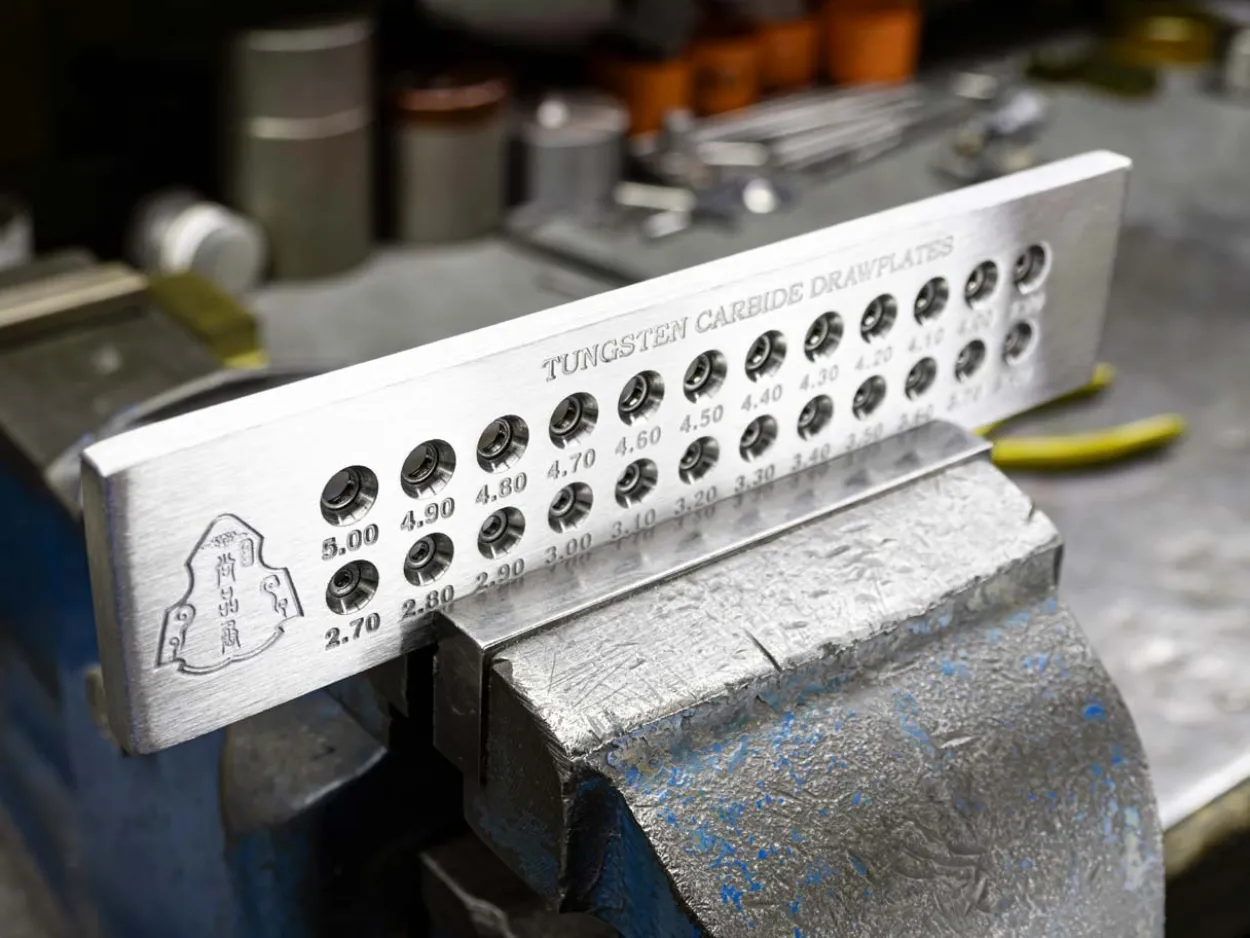
- Prepare the drawplate: Make sure the drawplate is secured and tighten in a vice.
- Prepare the wire: Anneal it by heating it to a dull red colour and then quenching it in water. After annealing the wire will be more malleable and easier to work with.
- Lubricate the wire: Coat the wire with a lubricant like beeswax or drawing lubricant. This will help reduce friction as it passes through the drawplate.
- Select the hole size: Choose a hole slightly smaller than the current diameter of your wire
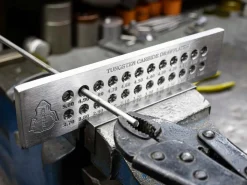
- Position the wire: Ensure the wire is fully inserted into the hole with enough sticking out to grip with draw tongs.
- Drawing the wire: Grip it firmly with draw tongs, making sure you have a good hold on the wire without damaging it. Pull the wire through the hole using steady pressure.
- Repeat with smaller holes: once the wire passes through the first hole and is reduced in size, move to the next smallest hole and repeat until you achieved desired diameter or shape.
- Finish the wire: Remove any excess lubricant and anneal it needed as the drawing process hardness the metal.
Using a drawplate in jewellery allows you to create wire of uniform size for various applications, including wire wrapping or even chain making. It is advised to keep this product oiled to avoid rusting.
Please note : It is advised to keep this product oiled to avoid rusting.
Be the first to review “Tungsten Carbide Round Circle Drawplate, 2.70mm – 5.00mm”
Related products
Burrs
Casting Equipment
Disc Cutters
Benches And Accessories
Cleaning & Care
Collet Forming Tools

Barrel/Disc Polishers & Spare
Air Compressors
Reviews
There are no reviews yet.